
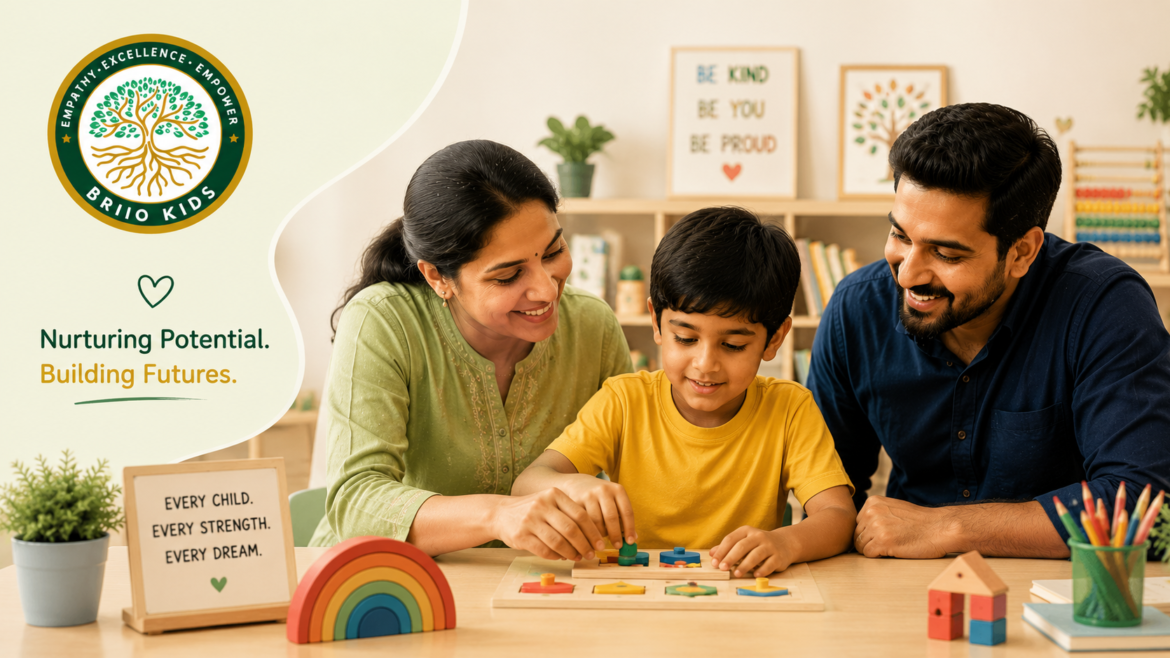
Finding the right school for a child with special needs is one of the most emotional and important decisions parents make. For many families in India, the search often begins with confusion, fear, and endless questions.
Will my child feel safe here?
Will teachers truly understand their needs?
Will they grow emotionally, socially, and academically?
The truth is, children with developmental differences do not just need a school. They need an environment where they feel accepted, supported, and understood every single day. This is why many parents today are no longer looking only for “special schools.” They are searching for a complete support system — an eco-system that nurtures the child as a whole. The right environment can completely change a child’s confidence, communication, emotional regulation, and independence. But choosing the right special needs school in India requires parents to look beyond advertisements and promises.
A Good Special Needs School Focuses on the Child, Not Just the Diagnosis
Many parents begin their search by focusing only on labels like autism, ADHD, speech delay, or learning disability. But the best special needs schools understand something far more important: every child is unique. Two children with the same diagnosis may have completely different strengths, emotional needs, sensory sensitivities, and learning styles.
A strong educational eco-system does not force every child into the same method. Instead, it creates personalised learning approaches that help children feel comfortable and capable. Children thrive when educators focus on abilities instead of limitations.
Emotional Safety Matters More Than Parents Realise
Children learn best when they feel emotionally safe. Unfortunately, many children with special needs experience repeated correction, comparison, punishment, or misunderstanding in traditional school settings. Over time, this affects self-esteem, confidence, and emotional development. A supportive eco-system creates an environment where children feel secure enough to participate, communicate, and learn without fear.
Parents should observe:
- How teachers speak to children
- Whether children appear calm and comfortable
- How emotional meltdowns are handled
- Whether staff show patience and empathy consistently
The emotional atmosphere of a school matters just as much as academics.
Look for Multi-Disciplinary Support Under One Roof
One of the biggest challenges Indian parents face is running between different therapy centres, schools, and specialists every week. This often becomes exhausting for both parents and children. The best special needs eco-systems provide integrated support where education, therapies, behavioural guidance, sensory support, and emotional development work together.
This coordinated approach creates consistency in a child’s progress. Children benefit greatly when therapists, educators, and parents communicate regularly instead of working separately. If you are still exploring early developmental concerns in your child, understanding the warning signs and learning patterns early can help families make better educational decisions with confidence.
Individualised Learning Is Extremely Important
Traditional classrooms usually follow one teaching style for every child. However, neurodivergent children often learn differently. Some children process information visually. Others respond better through movement, play-based learning, repetition, or sensory activities. A good special needs school adapts teaching methods based on the child’s individual needs.
Parents should ask:
- Are learning goals personalised?
- How are progress reports created?
- Does the school focus only on academics?
- Are life skills included in learning plans?
Real development is not measured only through marks and exams. Communication skills, emotional regulation, independence, and confidence are equally important.
Sensory-Friendly Environments Make a Huge Difference
Many children with autism and developmental differences struggle with sensory processing challenges. Bright lights, loud classrooms, crowded corridors, or chaotic environments can make learning extremely stressful. A strong eco-system understands these sensory needs and creates calmer learning spaces where children can focus comfortably.
Simple environmental changes can significantly improve behaviour, participation, and emotional regulation. Parents often notice better engagement when children feel physically and emotionally regulated. Families looking to support sensory development at home can also benefit from creating calming daily routines and sensory-friendly activities that improve emotional comfort.
Parent Involvement Should Be Encouraged
The best schools understand that parents are not outsiders in a child’s development journey. Parents should feel included, informed, and supported regularly. A healthy eco-system encourages open communication between educators, therapists, and families. Parents should receive honest feedback, practical guidance, and emotional support instead of only complaints. When home and school work together consistently, children usually show stronger progress.
Parents should never feel afraid to ask questions about:
- Teaching methods
- Therapy goals
- Emotional development
- Classroom behaviour
- Social interaction progress
Transparency builds trust.
Life Skills Matter Just as Much as Academics
In India, many parents feel pressured to focus heavily on academic achievement. But for many neurodivergent children, life skills are equally important for long-term independence and confidence. A strong special needs eco-system helps children gradually build skills such as:
- Communication
- Self-care routines
- Social interaction
- Emotional regulation
- Decision-making
- Problem-solving
These practical skills help children participate more confidently in daily life. Real success is not only about scoring high marks. It is about helping children function comfortably and confidently in the world around them.
Observe How the School Handles Behaviour
Every child experiences emotional frustration sometimes. However, neurodivergent children may express overwhelm differently through meltdowns, withdrawal, sensory reactions, or repetitive behaviours. Parents should carefully observe how schools respond during challenging moments. Punishment-based approaches often increase anxiety and emotional distress. The best schools focus on understanding the root cause of behaviour instead of simply controlling it. Children respond better when adults approach behaviour with patience, structure, emotional regulation, and sensory awareness.
Inclusion and Acceptance Create Confidence
Children develop confidence when they feel accepted instead of constantly corrected. A positive eco-system celebrates individuality while helping children grow socially and emotionally at their own pace.
Parents should look for schools where:
- Children appear emotionally comfortable
- Staff interact respectfully
- Small achievements are celebrated
- Learning feels engaging instead of stressful
Confidence becomes the foundation for communication, independence, and long-term development.
Choosing the Right School Takes Time
Many parents feel pressure to make quick decisions out of fear or emotional stress. But choosing the right educational environment requires observation, questions, and patience. Visit the school personally, Observe classrooms., Watch how children interact with teachers., Pay attention to emotional energy, not just infrastructure. A beautiful building alone does not guarantee the right support system. The right eco-system is one where children feel safe enough to learn, grow, communicate, and become more independent over time.
Final Thoughts
Every child deserves an environment where they feel understood, respected, and supported. The best special needs school in India is not simply the one with the biggest campus or the most advertisements. It is the one that sees the child beyond the diagnosis and creates a nurturing eco-system that supports emotional, behavioural, social, sensory, and academic development together. When families find the right environment, children often begin showing strengths that were hidden beneath stress, anxiety, and misunderstanding. Because with the right support, patience, and guidance, every child has the potential to grow with confidence and dignity.