
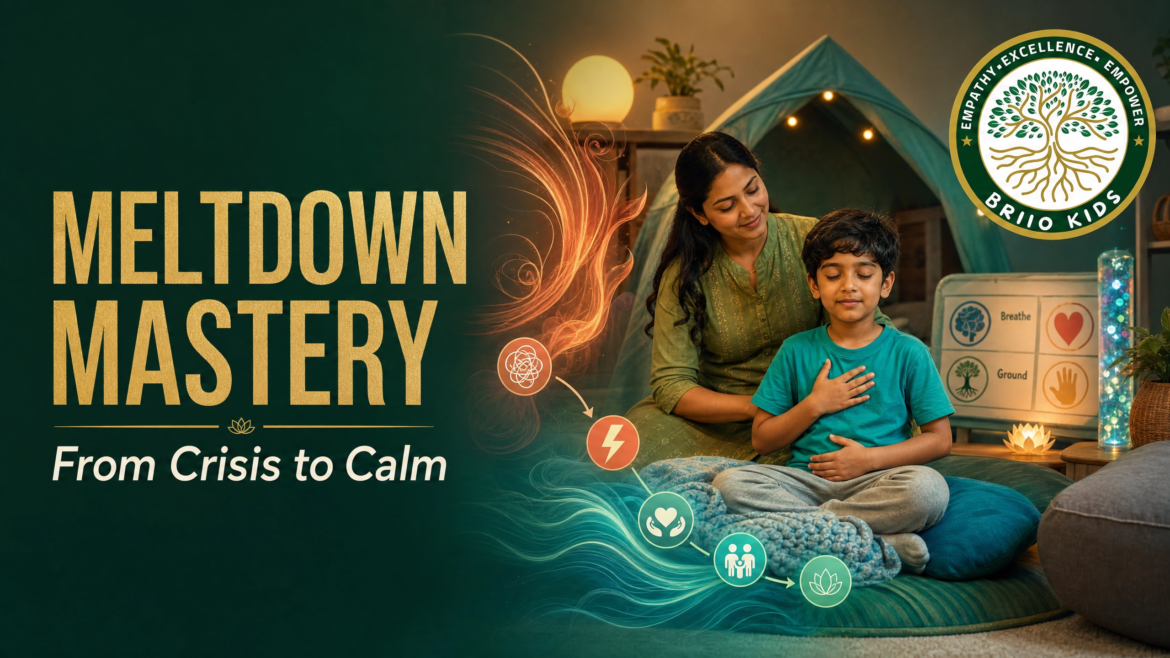
From Crisis Response to Prevention Strategy: Understanding and Managing Nervous System Dysregulation
Q: Is my child having a meltdown or a tantrum? How do I tell the difference?
A: A tantrum is behavioral—your child wants something and is protesting when denied. They’ll stop if they get what they want. A meltdown is neurological—your child’s nervous system is overwhelmed and dysregulated. They can’t stop it. They’re not being willful; they’re in survival mode. A tantrum has a goal (get the desired object). A meltdown has no goal—it’s pure dysregulation. The distinction matters because the response is different. A tantrum requires boundaries. A meltdown requires compassionate support and nervous system regulation. Most parents are trained to respond to tantrums with discipline. But a meltdown requires something entirely different: recognition, co-regulation, and recovery support.
Q: Can meltdowns be prevented? Or are they inevitable?
A: Many meltdowns can be prevented through early recognition and intervention. The Briio Meltdown Mastery System teaches parents to recognize the escalation phases before full dysregulation. At the first signs of escalation (subtle behavior changes, increased stimming, body tension, vocal changes), you intervene with co-regulation and sensory support. This stops the escalation before it reaches meltdown. Prevention is absolutely possible—and it dramatically reduces both the frequency and severity of meltdowns.
Q: When my child is in full meltdown, what should I actually do?
A: During a full meltdown, your child’s thinking brain is offline. They can’t hear reasoning. They can’t comply. They need safety and co-regulation, not punishment or logic. The Meltdown Mastery approach: (1) Ensure physical safety (remove hazards, prevent injury), (2) Reduce environmental stimulation (quiet, dim light if possible), (3) Provide calm, quiet presence (don’t talk much, just be there), (4) Use gentle proprioceptive input if your child tolerates it (weighted blanket, gentle pressure, deep breathing together). Let the meltdown run its course while keeping everyone safe. Once it passes, you support recovery—not punishment.
Q: After a meltdown, my child is exhausted and often falls apart again later. Why?
A: Meltdowns are neurologically and physically exhausting. Your child’s nervous system has been in high-stress overdrive. After the meltdown, they need deep recovery—not resumption of normal activities. The Meltdown Mastery System includes recovery protocols: sensory calming (movement, music, texture), time for nervous system settling, reduced demands, possibly rest or sleep. Many second meltdowns happen because insufficient recovery time was provided. Recovery is not coddling—it’s neurological necessity.
Why Meltdowns Are Particularly Difficult in Indian Family Contexts
In Indian culture, emotional regulation and obedience are deeply valued. A child having a meltdown in public is seen as a parenting failure. Family members judge. Strangers comment. Teachers blame the parents. The child internalizes shame.
So many Indian parents respond to meltdowns with punishment: Stop this behavior immediately. You are embarrassing us. I will give you something to cry about. This intensifies the dysregulation—your child is now terrified and dysregulated simultaneously.
What parents often don’t realize: Punishment doesn’t prevent meltdowns. It increases them. A terrified child dysregulates more easily, more frequently, more severely. The shame and fear become part of the nervous system response.
The Briio Meltdown Mastery System is radically different. We reframe meltdowns not as behavioral failure but as nervous system dysregulation. We teach parents to recognize escalation early, intervene compassionately, and support recovery—rather than punishing the inevitable dysregulation.
Understanding Dysregulation: The Path to Mastery
You know the spiral: Your child is fine. Then something triggers escalation. They are increasingly upset. You try reasoning, distraction, discipline—nothing works. Then full meltdown. Screaming, crying, aggression, complete dysregulation. It is terrifying.
Most parents experience meltdowns as unpredictable crises. But they are not random. There are patterns. Escalation phases. Warning signs. The Briio Meltdown Mastery System teaches you to read these signs. To intervene early. To support recovery effectively.
Mastery does not mean preventing all meltdowns. Neurodivergent children will still dysregulate sometimes. But with mastery, you: (1) Recognize escalation early, (2) Intervene before full meltdown, (3) Support your child effectively during dysregulation, (4) Guide recovery powerfully. Meltdowns become manageable. Their frequency and severity decrease. Your family’s stress transforms.
The Escalation Cycle: From Calm to Meltdown
Most meltdowns progress through predictable phases. Understanding these phases is foundational to mastery:
Phase 1: The Trigger (Baseline to Early Signs). Something happens: Unexpected change, sensory overload, unmet need, social misunderstanding, physical discomfort. Your child shows first signs of upset—subtle behavior changes, increased stimming, body tension, vocal changes. Most parents miss this phase. It is the prevention window.
Phase 2: Escalation (Early Upset to Intense Upset). Your child is noticeably upset now. They are expressing frustration verbally or behaviorally. They might be crying, raising their voice, moving rapidly. Their nervous system is activating. Intervention here can still prevent meltdown.
Phase 3: Crisis (Full Dysregulation). Your child is in complete meltdown. Screaming, crying, aggression, complete loss of control. Their thinking brain is offline. Reasoning will not work. Discipline will not work. They need safety and co-regulation only.
Phase 4: Recovery (Resolution and Reset). The meltdown begins to pass. Your child is exhausted, often withdrawn or tearful. They are vulnerable. They need support, not blame. Recovery protocols help their nervous system settle.
Phase 5: Post-Meltdown (Return to Baseline). If recovery was adequate, your child gradually returns to baseline. They might be tired. They might be emotionally vulnerable. They need gentleness, not resumption of normal demands.
The Meltdown Mastery Framework: Recognize, Prevent, Support, Recover
The Briio Meltdown Mastery System teaches four core competencies:
- RECOGNIZE: Know your child’s unique escalation signs. Every child has patterns. Does your child get quiet before exploding? Do they show specific behaviors when dysregulated? Do certain triggers always set them off? The Mastery System helps you develop a detailed profile of your child’s escalation pattern. Once you recognize the signs, you have a prevention window.
- PREVENT: Intervene during Phase 1 or Phase 2 escalation. Co-regulate your child’s nervous system before full dysregulation occurs. Use sensory support (proprioceptive input, movement, music), environmental modifications (reduce stimulation), or direct intervention (redirect, offer choices, address the underlying need). Prevention is dramatically easier than crisis management.
- SUPPORT: During meltdown (Phase 3), ensure safety and provide calm co-regulation. Your child’s thinking brain is offline—reasoning does not work. Punishment does not work. What works: physical safety, reduced stimulation, calm presence, gentle proprioceptive input if tolerated. You are not stopping the meltdown. You are supporting your child through it safely.
- RECOVER: After meltdown (Phase 4-5), guide nervous system recovery with intention. Sensory calming (movement, music, weighted pressure), time without demands, often rest or sleep, gentle reconnection. Recovery is not punishment or lectures. It is neurological support for a depleted system.
Three Families’ Meltdown Mastery Journeys
Here is what meltdown mastery looks like in practice:
Journey 1: Anaya’s Progression From Daily Crises to Rare Meltdowns (Kolkata, Age 10)
Before Mastery: Anaya had 3-5 meltdowns daily. Her mother was in constant crisis mode. Transitions triggered meltdowns. Unexpected changes triggered meltdowns. Social conflicts triggered meltdowns. The unpredictability was exhausting.
Learning to Recognize: Briio helped her mother identify Anaya’s escalation signs. Anaya got very quiet before exploding. Her body tensed. Her breathing changed. These were the Phase 1 signs. Her mother had been missing them completely—seeing only the explosion, not the buildup.
Prevention Phase: Once her mother recognized Phase 1 signs, she intervened immediately. Sensory support (swinging, deep pressure), redirecting to a preferred activity, or just offering her daughter quiet time. The meltdown did not happen.
Recovery Learning: When meltdowns still occurred, her mother learned recovery protocols. Instead of lectures after, she offered sensory calming and quiet time. Recovery became supportive rather than punitive.
Outcome: By month three, daily meltdowns decreased to 1-2 weekly. By month six, meltdowns were rare—maybe 1-2 monthly. Not eliminated, but manageable. Her mother went from crisis response to mastery.
Journey 2: Vikram’s Identity Shift From Problem Child to Child With Dysregulation Challenges (Delhi, Age 9)
Before Mastery: Vikram had internalized a profound identity: I am bad. I cannot control myself. Nobody likes me. His meltdowns came with intense shame and self-blame. After each meltdown, he would say things like I am a bad person or I cannot do anything right.
Reframing Dysregulation: Briio helped Vikram and his parents reframe. Meltdowns are not character failure. They are nervous system dysregulation. His brain is not bad. It is just wired differently. This reframing was powerful.
Mastery Through Understanding: As Vikram’s parents learned to recognize escalation and intervene preventively, meltdowns decreased. More importantly, Vikram’s shame decreased. He started to see meltdowns as something his nervous system experiences, not something that defines him.
Identity Healing: By age 10, Vikram’s identity began shifting. He was not the problem child. He was a kid whose nervous system dysregulates sometimes—and we are learning to manage it together. The shift was subtle but profound.
Journey 3: Isha’s Progression From Punishment Cycles to Partnership Approach (Bangalore, Age 11)
Before Mastery: Isha’s family responded to meltdowns with punishment. Grounding, yelling, shame. The punishment often triggered a second meltdown. The family was stuck in punishment-dysregulation cycles.
Learning the Mastery System: When her parents learned about nervous system dysregulation and mastery protocols, they had to completely shift their approach. No more punishment. Instead: recognition, prevention, support, recovery.
Family Transformation: The first month was difficult—her parents had to resist their impulse to punish. But they persisted. They recognized escalation signs. They intervened preventively. When meltdowns occurred, they supported rather than punished. Meltdowns decreased. The family’s stress decreased dramatically.
Partnership Model: By age 12, Isha and her parents had developed genuine partnership around dysregulation. Isha learned to recognize her own escalation. Her parents learned to support rather than punish. They became a team managing dysregulation together, not adversaries in power struggle.
Prevention Strategies: Intervention Before Meltdown
Prevention is exponentially easier than crisis management. Once you recognize escalation signs, you have multiple intervention options:
Sensory Intervention: Proprioceptive input (heavy work, resistance), vestibular input (swinging, movement), auditory calm (music, rhythm), tactile comfort (weighted items, texture). Match your child’s sensory needs to the intervention.
Environmental Modification: Reduce stimulation (quieter space, dimmer lights), remove the trigger if possible (leave the overwhelming situation temporarily), or change the sensory environment (take a break outside, move to a different room).
Emotional Support: Validate the feeling (I see you are frustrated), offer choices (Do you want to take a break or have a snack?), or redirect to a calming activity. Often, just feeling understood prevents escalation.
Meeting Underlying Needs: Sometimes meltdowns signal unmet needs. Hunger? Fatigue? Overstimulation? Unresolved conflict? Address the underlying need, and dysregulation often resolves.
During Meltdown: Support, Not Punishment
When your child is in full dysregulation, your thinking brain becomes their co-regulator. Here is what actually helps:
Ensure Physical Safety: Remove hazards. Prevent self-injury or harm to others. This is your primary responsibility during meltdown.
Reduce Stimulation: Quiet voice (or silence), dim lights if possible, reduce unnecessary activity. A dysregulated nervous system is already overloaded.
Provide Calm Presence: Be near but do not force interaction. Your calm presence co-regulates their dysregulated system. Do not talk much. Do not explain or reason. Just be calmly present.
Gentle Proprioceptive Support (if tolerated): Weighted blanket, gentle pressure, deep breathing together. Only if your child accepts touch—some dysregulated children cannot tolerate it.
Do not Punish or Lecture: Your child’s thinking brain is offline. Punishment and lectures will not work—they will intensify dysregulation. Just support them through it.
Recovery Protocols: Rebuilding After Dysregulation
Recovery is not optional. It is neurologically necessary. After meltdown, your child’s nervous system is depleted. Intentional recovery supports deep settling:
Immediate Post-Meltdown (First 15-30 minutes): Sensory calming (movement, music, weighted items), time without demands, possibly quiet time alone. Your child needs to settle, not be forced back to normal immediately.
Extended Recovery (Next few hours): Reduced demands, preferred activities that are calming, often rest or sleep. Your child’s nervous system needs extended settling time.
Gentle Reconnection: Once settled, reconnect gently. That was hard. I am here. No lectures. No blame. Just compassionate presence. Your child needs to know they are loved even when dysregulated.
Learning From Meltdown (Much Later): Only after your child is fully recovered—maybe days later—can you explore what triggered the meltdown and how to prevent similar dysregulation. Not for punishment. For learning.
Building Your Family’s Meltdown Mastery
You can begin mastery work immediately:
- Create Your Child’s Escalation Profile: Over the next week, notice escalation signs. Quiet before explosion? Specific body language? Vocal changes? Document everything. This is your child’s unique escalation pattern.
- Identify Triggers: What situations typically lead to meltdowns? Transitions? Sensory overload? Unmet needs? Know your child’s triggers so you can anticipate and prevent dysregulation.
- Develop Prevention Strategies: For each trigger, what sensory or environmental support might prevent dysregulation? Create a menu of prevention options to try.
- Practice Recognition: Once you know escalation signs, practice recognizing them in real time. Your goal: catch Phase 1 or Phase 2 escalation before Phase 3 meltdown.
- Shift Your Response: Move from punishment to support. During meltdown, focus on safety and calm presence. After meltdown, focus on recovery, not blame.
If you want structured guidance for meltdown mastery, Briio’s Meltdown Mastery System course and parent coaching provide comprehensive frameworks, real-family examples, and specific protocols for your child’s unique dysregulation patterns.
From Crisis to Competence
Meltdowns will remain part of your neurodivergent child’s experience. They will not disappear. But with meltdown mastery, they transform. From unpredictable crises to manageable dysregulation episodes. From shame-based punishment cycles to compassionate support partnerships. From exhaustion to relative calm.
The Briio Meltdown Mastery System teaches you to recognize the signs, prevent when possible, support effectively during meltdown, and guide recovery intentionally. It is not a cure for dysregulation. It is mastery over how you respond to dysregulation.
When you have mastery, meltdowns become moments of connection instead of crisis, opportunities for learning instead of failure, and evidence of your child’s nervous system reaching toward regulation—not falling apart.
Ready to build meltdown mastery in your family? Explore Briio’s comprehensive Meltdown Mastery System course, family-specific protocols, and ongoing parent coaching designed to transform your relationship with dysregulation. Discover how recognition, prevention, support, and recovery can become your family’s new normal.
The Briio Way: Meltdown Mastery. From Crisis Response to Competent Partnership. Dysregulation With Dignity.