
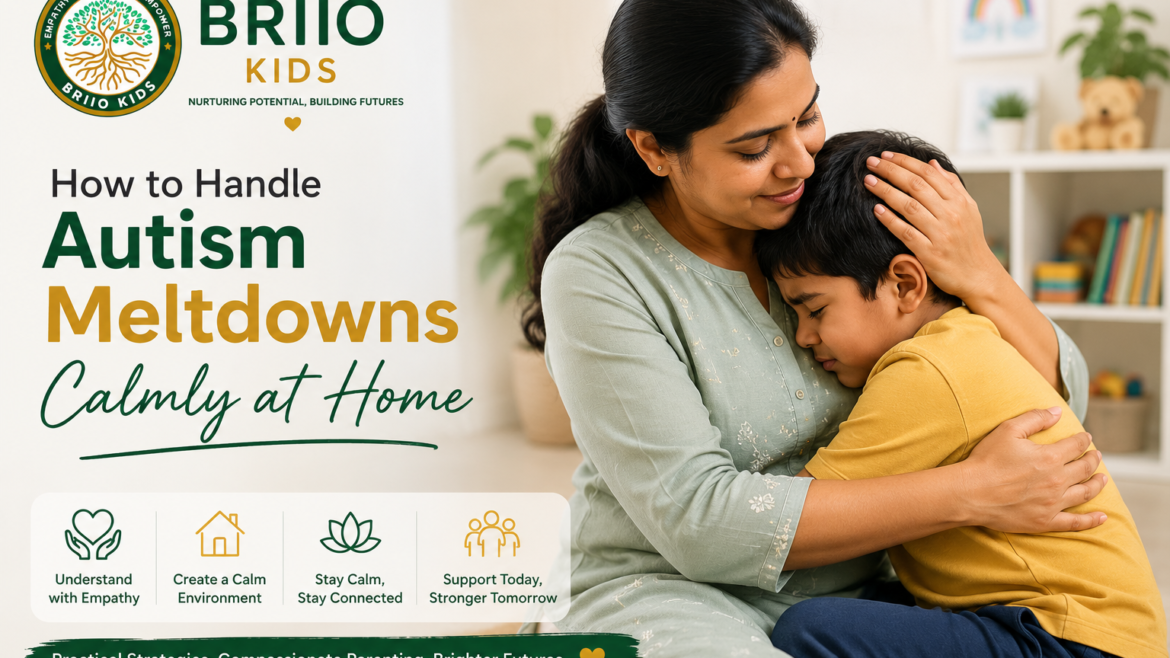
Parenting a neurodivergent child comes with moments of deep joy, connection, and growth. But for many Indian families, autism meltdowns can also become one of the most emotionally exhausting parts of daily life. A child may suddenly scream, cry uncontrollably, hit themselves, throw objects, cover their ears, or completely shut down. These situations can leave parents feeling helpless, guilty, frustrated, or afraid.
Many parents silently ask themselves:
“Am I doing something wrong?”
“Why is my child reacting like this?”
“How do I calm them without making things worse?”
The truth is, autism meltdowns are not tantrums, bad behaviour, or attention-seeking actions. They are often the result of emotional, sensory, communication, or nervous system overload. Understanding this difference changes everything. When parents respond calmly and strategically instead of emotionally, the home environment becomes safer, more regulated, and more supportive for the child.
What Is an Autism Meltdown?
An autism meltdown happens when a child becomes overwhelmed and loses the ability to regulate emotions or sensory input. Unlike tantrums, meltdowns are not about manipulation or getting something. They are usually a response to extreme stress inside the child’s body and brain.
Children with autism may struggle to process:
- Loud sounds
- Sudden changes
- Emotional stress
- Sensory overload
- Communication frustration
- Social pressure
- Physical discomfort
When too many stressors build up together, the nervous system can become overloaded. This overload eventually explodes outward through crying, aggression, screaming, running away, or complete emotional shutdown. Understanding the root cause is the first step toward effective autism meltdown help.
Why Indian Families Often Struggle With Autism Meltdowns
In many Indian households, there is constant activity, noise, social interaction, and pressure from extended family members.
Children may become overwhelmed by:
- Loud TV sounds
- Crowded gatherings
- Constant instructions
- Academic expectations
- Sudden visitors
- Unstructured routines
- Emotional tension at home
Unfortunately, many parents are advised to “discipline” the child more strictly instead of understanding the child’s nervous system needs. This often increases anxiety and emotional dysregulation. A child experiencing a meltdown does not need punishment. They need emotional safety and regulation support.
Stay Calm First — Your Nervous System Affects Your Child
One of the biggest mistakes parents make during meltdowns is reacting emotionally. Shouting, threatening, arguing, or panicking usually escalates the situation further. Children with autism are highly sensitive to emotional energy. If the adults become emotionally dysregulated, the child’s nervous system often becomes even more overwhelmed.
During a meltdown:
- Lower your voice
- Reduce verbal instructions
- Slow your body movements
- Avoid arguing
- Focus on safety first
Your calmness helps signal safety to your child’s nervous system. This is one of the most powerful autism parenting tips parents can learn.
Identify the Triggers Behind the Meltdown
Every meltdown has a reason, even if it is not immediately obvious. Parents should begin observing patterns carefully.
Ask yourself:
- Did the child experience sensory overload?
- Was there a sudden routine change?
- Were they hungry or tired?
- Was communication difficult?
- Did they feel emotionally pressured?
- Was the environment too noisy or crowded?
Over time, identifying patterns helps parents reduce future meltdowns proactively. Frequent meltdowns can sometimes be connected to deeper sensory, communication, or developmental challenges that parents may initially overlook. Many children benefit significantly when families create calmer sensory-friendly environments at home with more predictable routines and emotional structure.
Reduce Sensory Overload at Home
Sensory overload is one of the most common causes of autism meltdowns. Many neurodivergent children process sounds, textures, lights, smells, and movement differently.
Small changes at home can make a huge difference:
- Lower unnecessary noise
- Reduce screen overstimulation
- Create a quiet calming corner
- Use soft lighting
- Avoid chaotic environments during stressful moments
- Give the child sensory breaks
When the nervous system feels calmer, emotional regulation becomes easier. Emotional dysregulation in neurodivergent children is not always behavioural sometimes the nervous system, sensory processing, sleep, and gut health also play a major role. Families exploring autism therapy at home often notice that environmental regulation improves behaviour more effectively than constant correction.
Do Not Force Communication During a Meltdown
Many parents repeatedly ask questions during meltdowns:
“What happened?”
“Why are you crying?”
“Tell me what you want.”
But during overload, many children temporarily lose the ability to process language effectively. Too much talking can increase frustration further.
Instead:
- Use fewer words
- Speak gently
- Offer reassurance
- Allow processing time
- Use visual cues if helpful
Sometimes silence and emotional presence are more powerful than constant verbal correction.
Create Predictable Daily Routines
Children with autism often feel safer when life feels predictable. Unexpected changes can create anxiety and emotional overload. Simple structured routines help children feel emotionally secure.
Try creating consistency around:
- Wake-up times
- Meals
- Therapy schedules
- Playtime
- Sleep routines
- Study periods
- Sensory breaks
Visual schedules can also help children understand transitions more comfortably. Many parents searching for autism therapy at home discover that structured routines reduce emotional instability significantly.
Teach Emotional Regulation Slowly
Emotional regulation is a skill that develops gradually over time. Children first need co-regulation before they can self-regulate. This means the parent’s calm support helps the child slowly learn how to manage emotions independently.
Helpful strategies include:
- Deep breathing exercises
- Sensory calming activities
- Movement breaks
- Compression hugs if the child enjoys pressure
- Calm-down routines
- Emotion cards or visual supports
The goal is not perfection. The goal is helping the child feel safer and more regulated over time.
Avoid Shame and Punishment
One of the most damaging responses to meltdowns is shame. Learning how to respond calmly during autism meltdowns can help children feel emotionally safer and more regulated over time.
Comments like:
- “Stop acting like this”
- “Normal children don’t behave this way”
- “People are watching”
- “You are embarrassing us”
Can deeply affect a child’s emotional wellbeing. Children with autism are not choosing to struggle. Punishment during overload often increases fear, anxiety, and emotional distress.
Instead of asking:
“How do I stop this behaviour?”
Parents should begin asking:
“What is my child trying to communicate?”
That shift creates more compassionate and effective parenting.
Take Care of Yourself Too
Many parents of neurodivergent children experience emotional burnout silently. Constant caregiving, judgment from society, school pressure, financial stress, and emotional exhaustion can overwhelm families. Parents cannot regulate children effectively if they themselves are constantly dysregulated.
Self-care is not selfish.
Even small things matter:
- Taking short breaks
- Asking for support
- Joining parent communities
- Sharing responsibilities
- Getting emotional support when needed
A calmer parent creates a calmer home environment.
When Should Parents Seek Professional Support?
If meltdowns become frequent, severe, or dangerous, professional guidance may help uncover deeper sensory, communication, emotional, or developmental challenges.
Children may benefit from:
- Sensory regulation support
- Occupational therapy
- Behavioural guidance
- Communication development
- Parent coaching
- Emotional regulation strategies
The earlier families receive the right support, the easier it becomes to build healthier long-term coping systems. Many Indian families wait too long because of fear, denial, or social stigma. But seeking help early is one of the strongest decisions a parent can make.
Building Emotional Safety at Home
Children thrive when they feel emotionally safe. A home filled with constant pressure, shouting, correction, or unpredictability can increase nervous system stress significantly.
A supportive environment includes:
- Patience
- Predictability
- Emotional connection
- Sensory understanding
- Gentle communication
- Safe routines
When children feel understood instead of constantly controlled, meltdowns often reduce naturally over time. Parents looking to create better emotional regulation at home often find that connection works more effectively than punishment.
Small Changes, Meaningful Progress
Autism meltdowns can feel overwhelming for families, especially when parents do not fully understand what their child is experiencing internally.
But meltdowns are not signs of failure.
They are signals.
Signals that a child’s nervous system is struggling to cope with stress, sensory overload, emotional pressure, or communication challenges.
When parents respond with calmness, structure, empathy, and understanding, children slowly begin feeling safer inside their own world.
Progress does not happen overnight.
But with the right environment, emotional support, and autism parenting strategies, families can create calmer homes where children feel understood, supported, and empowered every day.
And sometimes, the most powerful therapy begins not inside a clinic — but inside a home filled with patience, trust, and emotional safety.