
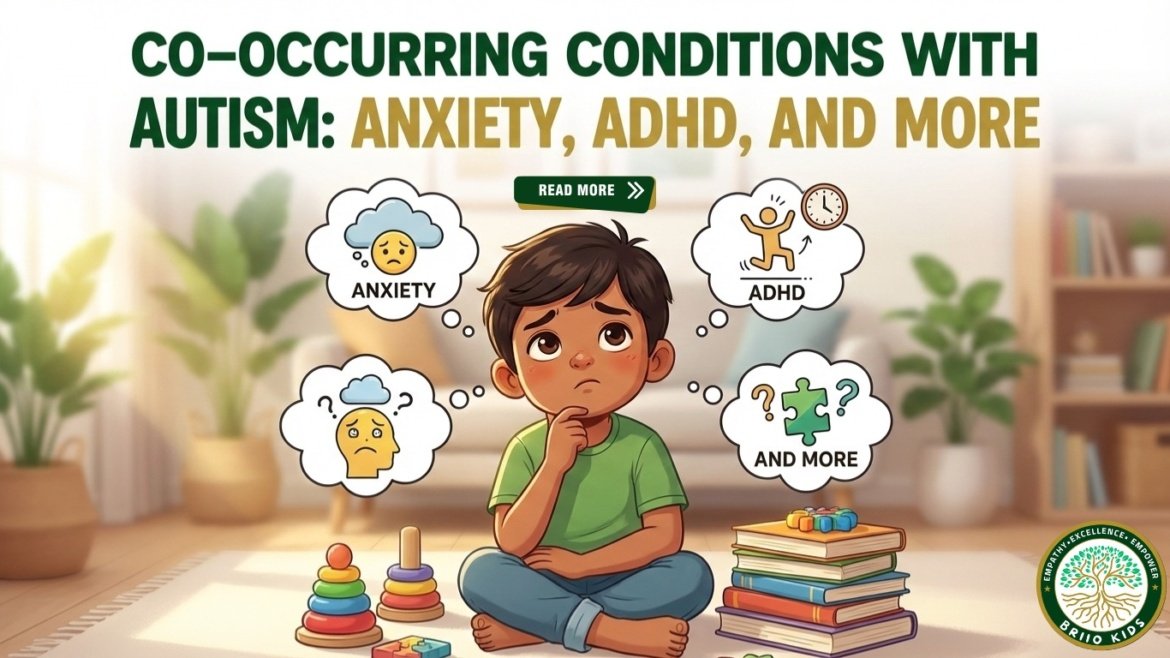
When parents first receive an autism diagnosis for their child, the focus naturally goes toward understanding autism itself. However, research shows that autism rarely exists alone. More than seventy percent of autistic children have at least one additional condition, and almost forty percent have two or more. These conditions, known as co-occurring conditions or comorbidities, can influence how a child learns, behaves, communicates, and regulates emotions.
Understanding these conditions is essential. It helps families recognise challenges earlier, seek the right support, and plan therapies that meet the child’s full developmental profile.
This guide explains the most common autism comorbidities, why they occur, how they affect daily life, and what families can do to support their child through holistic, evidence-based care.
1. Statistics on Co-Occurrence in Autism
Large-scale studies from global research institutions show that co-occurring conditions are the rule, not the exception, in autism.
Key statistics
- More than seventy percent of autistic individuals have at least one additional mental health or developmental diagnosis.
- Nearly forty percent have two or more co-occurring conditions.
- Anxiety disorders are seen in about forty to sixty percent of autistic children.
- ADHD co-occurs with autism in thirty to fifty percent of cases.
- Sleep disorders affect fifty to eighty percent of autistic children.
- Gastrointestinal issues affect up to seventy percent.
- Epilepsy occurs in twenty to thirty percent of autistic individuals, especially those with co-occurring intellectual disability.
These numbers highlight the importance of comprehensive assessment rather than focusing on autism alone.
2. Anxiety Disorders in Autism and Why They Are So Common
Anxiety is one of the most common co-occurring conditions. Autism anxiety presents differently than typical anxiety and is deeply connected to sensory processing, social expectations, and unpredictability.
Why anxiety is more common in autism
Sensory overload
Autistic children often experience intense sensory input. Loud noises, bright lights, and crowded environments can create chronic stress.
Difficulty interpreting social cues
Misreading facial expressions, tone of voice, or body language leads to constant uncertainty, which increases anxiety.
Rigidity and need for predictability
Unexpected changes can trigger panic, confusion, or shutdowns.
Communication challenges
When children cannot express their needs or fears clearly, they may feel unsafe or misunderstood.
Negative experiences
Repeated failures in social situations, behavioural misunderstandings, or school challenges can create long-term anxiety.
Signs of anxiety in autistic children
- Excessive worrying
- Avoidance of social settings
- Clinging to routines
- Meltdowns triggered by uncertainty
- Sleep difficulties
- Physical symptoms like stomach pain or headaches
It is important to differentiate between sensory distress, autistic overwhelm, and clinical anxiety so intervention can be targeted.
3. ADHD and Autism: Overlap and Key Differences
Autism ADHD together is one of the most studied combinations in child development. Many children have traits of both, and distinguishing them requires expert assessment.
Why ADHD often co-occurs with autism
Both conditions involve differences in brain networks that regulate attention, impulse control, sensory processing, and executive functioning. This leads to overlapping behaviours like restlessness, difficulty focusing, and challenges with transitions.
Shared traits
- Distractibility
- Fidgeting and hyperactivity
- Difficulty with planning and organisation
- Problems with emotional regulation
- Impulsivity
Key differences
Attention
- ADHD: distractibility driven by internal restlessness
- Autism: distractibility often due to sensory overload or intense focus on interests
Social interaction
- ADHD: social mistakes come from impulsivity
- Autism: social differences come from difficulty interpreting communication
Sensory processing
- ADHD: sensory seeking is common
- Autism: sensory seeking or sensory avoidance occurs more intensely
Repetitive behaviours
- ADHD: usually not present
- Autism: common and often used for regulation
Treatment considerations
Children with both conditions often require
- behaviour therapy
- occupational therapy
- executive functioning support
- sensory regulation strategies
- possible medication when appropriate and monitored by specialists
Diagnosis of ADHD should be made cautiously because high anxiety or sensory overload can mimic ADHD symptoms.
4. Sleep Disorders and Autism
Sleeping difficulties are one of the most widespread co-occurring challenges.
Types of sleep problems
- Difficulty falling asleep
- Frequent night waking
- Irregular sleep cycles
- Early waking
- Poor sleep quality
Why sleep issues occur
Children may be sensitive to touch, sound, temperature, or light.
Dysregulated melatonin production
Autistic individuals often produce melatonin at inconsistent levels, affecting sleep cycles.
Worry or overstimulation delays settling.
Rigid routines
Anxiety
Some children find it difficult to wind down after a highly structured day.
Impact of poor sleep
- Increased irritability
- Reduced focus
- Behavioural challenges
- Lowered immune function
- Learning difficulties
Management strategies
- Consistent bedtime routines
- Dimmed lights and reduced screen exposure
- Sensory friendly bedding
- Calming deep-pressure activities
- Consultation with developmental paediatricians when sleep disruption is severe
Sleep must be addressed proactively because it influences every other area of functioning.
5. Gastrointestinal Issues and the Gut Brain Connection
GI issues are highly prevalent among autistic children. Many parents report that their child struggles with constipation, diarrhoea, reflux, bloating, or picky eating.
Possible reasons behind GI issues in autism
Sensory differences
Certain textures or tastes may be difficult, leading to restricted diets.
Anxiety and stress
The gut produces neurotransmitters that are impacted by stress.
Differences in gut bacteria
Research shows variations in the gut microbiome in autistic individuals.
Limited food variety
Restricted eating patterns can lead to nutritional imbalances.
Communication difficulties
Children may be unable to express abdominal pain or discomfort.
Signs of GI discomfort
- Food refusal
- Irritability during meals
- Withdrawing during eating
- Frequent constipation
- Sudden behavioural changes
Parents should work with paediatricians, gastroenterologists, dietitians, and occupational therapists to create a personalised plan. Improving gut health often improves behaviour and emotional regulation.
6. Epilepsy Risk in Autism
Epilepsy is one of the most serious co-occurring conditions and affects a significant number of autistic individuals.
How common is epilepsy in autism
- Approximately twenty to thirty percent of autistic children have seizures
- Higher risk in children with intellectual disability
- Higher occurrence during adolescence
Why autism and epilepsy are connected
Both involve differences in brain connectivity and electrical activity. Not all autistic children will develop epilepsy, but awareness is crucial.
Signs of seizures parents should watch for
- Sudden staring spells
- Jerking movements
- Loss of awareness
- Confusion after episodes
- Sudden falls without explanation
Any suspicious event should be evaluated by a neurologist. EEG assessments help confirm diagnosis. Early treatment reduces risk of complications.
7. Treatment Considerations When Multiple Diagnoses Are Present
When autism comorbidities overlap, treatment requires coordination among professionals. Each condition affects the other, so therapy must be integrated.
1. Establish priorities
Important considerations
Address conditions that impact safety, sleep, or daily functioning first.
2. Use a team based approach
Professionals may include
- developmental paediatrician
- occupational therapist
- speech therapist
- neurologist
- psychologist
- dietitian
3. Avoid rushing to medication
Medication may help ADHD, anxiety, or epilepsy but must be carefully monitored. Behavioural and sensory strategies should be introduced simultaneously.
4. Tailor therapy to the child’s profile
For example
- Anxious autistic child: sensory integration therapy plus emotional regulation coaching
- Autistic child with ADHD: executive functioning strategies plus movement based OT
- Autism with GI issues: diet and feeding therapy alongside sensory work
5. Consider long term development
Interventions must focus on independence, communication, emotional wellbeing, and sensory regulation.
6. Monitor changes regularly
Co-occurring conditions evolve. Reviews help ensure therapy remains relevant.
Parents should avoid focusing on labels. What matters is how each condition affects the child’s ability to participate in life.
8. The Importance of Holistic Assessment
A holistic assessment is essential because each co-occurring condition interacts with autism in unique ways. Looking only at one symptom can lead to incomplete or inaccurate support plans.
What holistic assessment includes
- Sensory processing evaluation
- Cognitive and learning assessment
- Communication and speech evaluation
- Behavioural assessment
- Sleep patterns
- Medical screening for GI or neurological conditions
- Emotional and anxiety assessment
- Family and environmental factors
Benefits of holistic assessment
- Accurate diagnosis
- Individualised therapy plans
- Greater insight into triggers and strengths
- Prevention of misdiagnosis
- Better collaboration between parents, teachers, and therapists
When families understand the complete picture, they can advocate confidently for their child’s needs at school and in therapy.
Conclusion
Autism is a complex neurodevelopmental condition, and co-occurring conditions often shape the child’s daily experiences and long term development. Conditions like anxiety, ADHD, sleep disorders, gastrointestinal issues, and epilepsy are common. When autism comorbidities are identified early, children receive targeted support that improves communication, behaviour, learning, and emotional stability.
Parents should remember that co-occurring conditions are not signs of failure or severity. They simply highlight areas where the child’s brain and body need extra support. Holistic assessments, coordinated care, and evidence based therapy approaches make a significant difference. With the right guidance, autistic children can thrive, build resilience, and develop meaningful connections with their world.