
Parents often feel confused, worried, or even guilty when their child has intense emotional outbursts. It is difficult to know whether the behavior is a tantrum or something deeper, like a meltdown. The difference between the two is extremely important, especially for children with autism or sensory processing challenges. Understanding what is happening in the brain helps parents respond in ways that calm, support, and protect their child rather than escalate the situation.
This guide explains the science behind meltdowns, how to differentiate them from tantrums, what triggers them, and how parents and teachers can respond with insight and compassion.
1. The Neurological Basis of Meltdowns
A meltdown is not a behavioral choice. It is a neurological response. When a child with autism or sensory sensitivities becomes overwhelmed, the brain shifts into a survival mode.
What happens in the brain
- The amygdala, which manages threat detection, becomes hyperactive
- The prefrontal cortex, which controls reasoning and self-regulation, shuts down
- Stress hormones like cortisol and adrenaline flood the body
- The nervous system moves into fight, flight, or freeze
A meltdown is the brain’s way of signalling overload. The child is not trying to misbehave. They are losing the ability to cope.
Why autistic children are more vulnerable
- Sensory input arrives too intensely or too quickly
- Social cues are harder to interpret
- Communication difficulties increase frustration
- Predictability is essential for emotional safety
When these systems collide, the nervous system hits a breaking point.
2. Key Differences Between Meltdowns and Tantrums
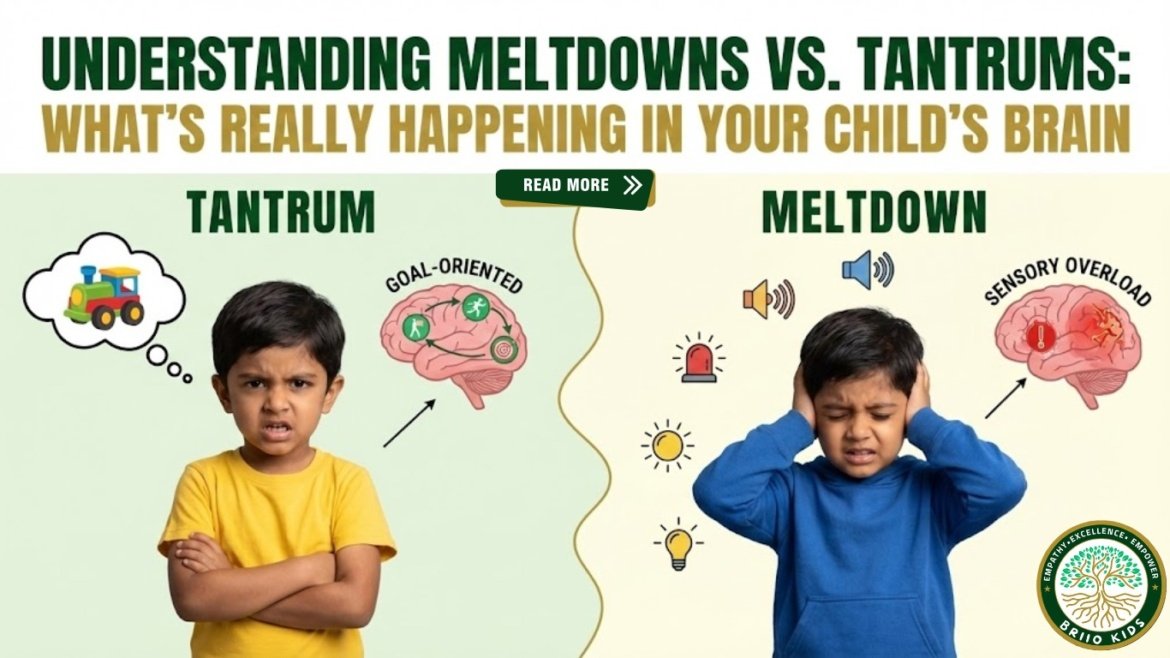
Many behaviors look similar on the outside. The difference lies in intention, control, and ability to recover.
Tantrum
- Goal-driven
- Happens when the child wants attention, an item, or a preferred activity
- Child maintains some awareness of surroundings
- Stops when need is met or motivation changes
- Behaviour is influenced by others’ reactions
Meltdown
- Not goal-oriented
- Triggered by overwhelm, fear, sensory overload, or emotional stress
- Loss of control
- Cannot stop even if parents give in
- The nervous system is in distress
- Ends only when the child’s body and brain reset
A key rule: if the child cannot stop even when getting what they wanted, it is a meltdown.
3. Identifying Triggers: Sensory, Emotional, and Routine Changes
Understanding triggers prevents escalation and helps parents support regulation.
Sensory Triggers
- Loud sounds like traffic, school bells, pressure cooker whistles
- Bright or flickering lights
- Strong smells
- Overcrowded spaces
- Uncomfortable clothing or tags
- Sudden touch or unpredictable movement
For sensory overload children, even mild stimuli can feel unbearable.
Emotional Triggers
- Difficulty expressing feelings
- Losing a game
- Being misunderstood
- Separation anxiety
- Built-up frustration that spills over
Routine Change Triggers
Children with autism depend on predictability. Unexpected transitions can be overwhelming.
Common examples
- School timetable changes
- Change of classroom teacher
- Cancelled outing
- Visitors at home
- Modified bedtime routines
Documenting triggers allows patterns to emerge. Once patterns are visible, prevention becomes possible.
4. The Arousal Curve and Preventive Approach
The arousal curve is a visual model used by therapists to identify where a child’s nervous system stands before, during, and after a meltdown.
Stages of the Arousal Curve
Baseline
The child is calm and regulated. Communication is easiest during this stage. Sensory input is manageable.
Buildup
Early signs of dysregulation appear
- Fidgeting
- Increased pacing
- Covering ears
- Vocal stress like whining or repeating phrases
- Increased sensitivity
This is the most important stage for intervention.
Escalation
The nervous system becomes overwhelmed. The child begins
- Crying
- Screaming
- Running away
- Hitting or kicking if fearful
Intervening with logic at this stage is ineffective.
Meltdown
Full loss of control. The child is in survival mode and must be supported with safety and calm.
Recovery
The nervous system resets. The child may feel exhausted, ashamed, or sleepy. This is a time for care, not teaching.
Parents who learn to recognize the buildup phase can prevent many meltdowns with timely strategies.
5. During a Meltdown: Safety First Strategies
The goal is not to teach or discipline. The goal is safety and de-escalation.
What parents should focus on
- Keep the environment safe
- Reduce sensory overload
- Maintain a calm tone and slow movements
- Protect the child from self-harm
- Give space if the child prefers distance
- Avoid verbal overload
Strategies that help
- Move to a quieter area
- Dim lights
- Provide deep pressure if the child finds it calming
- Remove triggering stimuli
- Use short phrases like “I am here” or “You are safe.”
Avoid negotiating, lecturing, or reasoning. The brain is not accessible during a meltdown.
What not to do
- Do not punish
- Do not compare the child to peers
- Do not label the behavior as attention-seeking.
- Do not match the child’s emotional intensity
A calm, predictable presence helps the nervous system stabilize.
6. After a Meltdown: Repair and Learning
Once the child is calm, the real work begins. This phase is essential for emotional connection and skill building.
Step 1: Recovery Support
- Offer water
- Provide a quiet space
- Maintain comforting physical presence if the child accepts it
- Avoid asking questions immediately
Step 2: Emotional Connection
Once the child is fully settled
- Acknowledge their feelings
- Use simple reflection like “That was hard” or “You were overwhelmed.”
- Validate the experience
Step 3: Teaching Self-Regulation
During calm periods, teach
- Deep breathing
- Visual schedules
- Sensory tools like headphones or chewable jewellery
- Asking for breaks
- Using emotion charts
Children learn regulation through repetition and modeling.
Step 4: Parent Reflection
Parents can journal
- What triggered the meltdown
- What signs appeared in the buildup phase
- What worked during calming
- What should be adjusted next time
This transforms meltdowns into insightful data points.
7. Accommodation vs Enabling: Understanding the Balance
A common question parents ask is whether accommodations encourage dependency. The answer requires nuance.
Accommodation
Modifying the environment or expectations to support a child’s neurological needs.
Examples
- Providing noise-canceling headphones
- Using visual schedules
- Allowing extra transition time
Accommodation allows the child to access learning, safety, and emotional growth.
Enabling
Removing all challenges or allowing behaviors that limit long-term development.
Examples
- Avoiding all social situations
- Allowing aggressive behaviour without boundaries
- Ignoring all routines
A balanced approach includes
- Support during high-stress situations
- Gradual exposure in low-stress environments
- Structured practice of coping skills
The goal is independence built on confidence, not fear.
8. Creating a Sensory Safe Space at Home
A sensory safe space provides comfort and helps prevent meltdowns before they escalate.
Elements of an effective sensory corner
- Soft mats or beanbags
- Low lighting or string lights
- Noise-reducing headphones
- Weighted blanket
- Fidget tools
- Visual emotion chart
- Books or calming toys
- A tent or canopy for smaller enclosed space
This area becomes a predictable retreat where the child can reset.
Tips for using the space
- Introduce it during calm periods
- Never use it as punishment
- Encourage voluntary use
- Add child preferences like favourite colours or characters
Children learn to self-regulate more effectively when they have a safe, structured environment.
9. School Communication: How to Explain Meltdowns to Teachers
Teachers often misunderstand meltdowns as misbehavior unless parents provide clarity. Open, consistent communication builds support and reduces stigma.
What parents can share with teachers
1. Description of the child’s triggers
For example
- Loud sounds
- Overcrowded classrooms
- Transition stress
- Unexpected schedule changes
2. Early signs of dysregulation
- Covering ears
- Hiding under desks
- Pacing
- Reduced eye contact
- Repetitive phrases
3. Effective calming strategies
- Break cards
- Quiet corner
- Allowing the child to step outside
- Sensory tools
4. Post-meltdown needs
5. Suggestions for preventive classroom support
- Visual schedules
- Predictable routines
- Warning before transitions
- Reduced sensory load during assemblies
Teachers appreciate practical, specific guidance that helps the child succeed in the classroom.
Conclusion
Understanding the difference between tantrums and meltdowns transforms how parents react to difficult moments. Tantrums come from a place of intention and negotiation. Meltdowns come from neurological overload. Knowing this difference helps parents choose compassion, predict triggers, and build preventive plans.
Managing autistic meltdowns begins with recognizing the early signs, reducing triggers, and creating environments where the nervous system feels safe. With the right support at home and school, children learn to regulate, communicate their needs, and thrive emotionally.
This blog empowers parents with a deeper understanding of autism meltdown vs. tantrum behavior and provides practical tools to navigate sensory overload in children. Every meltdown is an opportunity for insight, connection, and growth.